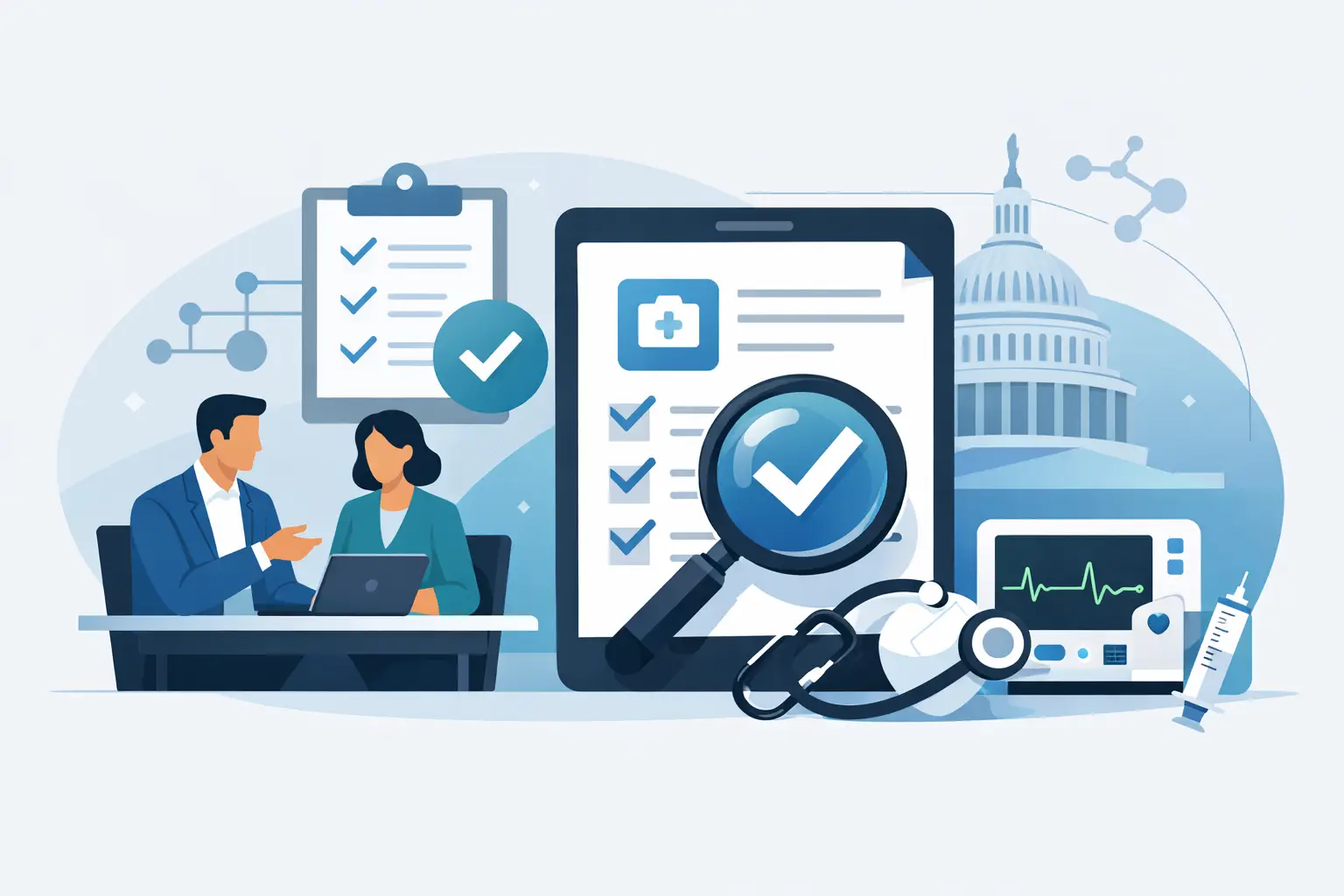
A 510(k) rarely slips because of one obvious mistake. More often, it slows down because the strategy was set too late, the predicate logic was weak, testing plans did not fully support intended use, or submission content was assembled without a clear reviewer perspective. That is exactly where 510k submission consulting services create value – not as administrative help, but as a strategic function that can materially affect timeline, cost, and approval risk.
For many device companies, the challenge is not understanding that a 510(k) is required. The challenge is knowing how to build the right submission the first time. Internal teams may have strong product knowledge, but still need specialized support to align regulatory strategy, performance data, labeling, risk management, and quality system expectations into a submission package the FDA can review efficiently.
What 510k submission consulting services should actually cover
The best consulting support starts well before the submission is compiled. A strong partner looks at the full regulatory picture, beginning with device classification, product code, intended use, indications for use, and likely predicate options. Those early decisions shape almost everything that follows, including testing scope, biocompatibility rationale, software documentation level, sterilization support, and human factors planning.
This is where many companies underestimate the complexity of the pathway. A 510(k) may be considered a well-established route, but it is not a simple form-filling exercise. Substantial equivalence must be argued with precision. The submission has to show that differences between the subject device and predicate do not raise new questions of safety and effectiveness. That requires both technical rigor and practical judgment.
Consulting services should also address the less visible parts of submission readiness. If design inputs are incomplete, if verification documentation is inconsistent, or if risk files do not align with labeling claims, those issues tend to surface during preparation or FDA review. A capable consulting team identifies those gaps early enough to correct them without derailing the program.
Why companies bring in 510(k) submission consulting services
The most common reason is speed, but speed alone is not the full story. Companies seek outside support because the cost of a weak submission is usually much higher than the cost of expert preparation. Additional information requests, internal rework, missed commercial milestones, and delayed investor or partner commitments all carry real business impact.
Startups often use consultants because they do not yet have in-house regulatory depth across every discipline involved in a 510(k). Established manufacturers may have regulatory personnel, but still bring in outside expertise when the device involves novel technology, software complexity, combination product questions, clinical uncertainty, or a compressed launch timeline.
There is also a bandwidth issue. Preparing a high-quality 510(k) requires sustained coordination across engineering, quality, clinical, operations, and leadership. Internal teams are usually balancing design changes, manufacturing transfer, supplier controls, and commercialization planning at the same time. External consultants can provide structure, accountability, and senior-level decision support when timing matters.
What strong 510(k) support looks like in practice
A good consulting engagement is not limited to document writing. It should help the company make better regulatory decisions throughout the submission process. That often begins with a realistic assessment of whether the device is in fact a fit for the 510(k) pathway or whether De Novo, a different predicate strategy, or a narrower intended use would produce a more defensible route.
Once the pathway is confirmed, the focus shifts to evidence planning. This means determining what bench, software, electrical safety, electromagnetic compatibility, biocompatibility, sterilization, shelf life, usability, or clinical data are needed. The right answer depends on the device, the claims, the technological characteristics, and the predicate comparison. Over-testing wastes time and budget. Under-testing creates obvious review risk. The value of an experienced consultant is knowing where that balance should be.
Submission development itself should be disciplined. The summary, device description, substantial equivalence discussion, labeling, standards declarations, and test report integration all need to tell a coherent story. FDA reviewers should not have to infer why the evidence is adequate. The submission should make that logic clear, direct, and technically supported.
Strong consultants also prepare clients for interaction, not just filing. If the FDA issues requests for additional information, response strategy becomes critical. Some questions can be closed quickly with focused clarification. Others may signal a larger issue with claims, testing rationale, or device comparison. The quality of those responses often determines whether the review stays on track.
Where submissions most often go off course
One common problem is predicate selection. Teams sometimes choose a predicate based on convenience or surface-level similarity, without fully evaluating intended use, technological characteristics, or differences that could trigger new questions of safety and effectiveness. That creates weakness at the center of the submission.
Another frequent issue is misalignment between product development and regulatory positioning. Engineering may design a feature set that expands beyond what the predicate supports, while marketing drafts claims that require evidence the team has not generated. By the time this becomes clear, the company may be facing retesting, relabeling, or strategy changes late in the program.
Software-driven devices introduce another layer of complexity. Cybersecurity expectations, software documentation, validation traceability, and interoperability questions can significantly affect submission content. Companies that treat software as just one section of the application often underestimate how central it is to review.
Quality system maturity also matters, even when companies are focused primarily on the submission itself. While the 510(k) review is not a quality system audit, weak design control practices tend to show up in the underlying records, verification logic, and change management history. Submission quality is often a reflection of development discipline.
Choosing the right consulting partner
Not all 510(k) support is equally strategic. Some firms are effective at formatting and assembly but less capable when the core issue is regulatory judgment. Others can advise at a high level but do not provide the hands-on execution needed to move a submission to completion. Medical device companies usually need both.
A strong consulting partner should be able to assess pathway fit, challenge assumptions, define evidence needs, coordinate cross-functional inputs, and write clearly enough for FDA review. Just as importantly, they should understand the commercial context. A regulatory recommendation is only useful if it accounts for budget, timeline, product roadmap, and market objectives.
Industry specialization matters here. A team that works deeply in med tech will usually recognize common review pitfalls, anticipate documentation gaps, and align regulatory strategy with quality requirements more effectively than a generalist advisory group. That kind of experience can reduce avoidable cycles and support more confident decision-making.
This is also why many companies look for a consulting partner that can bridge regulatory affairs and quality systems rather than treating them as separate tracks. In practice, those functions intersect constantly during submission preparation. Firms such as Qualira are built around that integrated model, which is often more useful than isolated regulatory support when the goal is not just filing, but sustainable readiness.
The business case for outside support
Bringing in consultants does add cost, so the question is whether the investment changes the outcome in a meaningful way. In many cases, it does. A well-run engagement can shorten preparation time, reduce rounds of internal rework, strengthen FDA interactions, and avoid strategic mistakes that are expensive to correct after submission.
That does not mean every company needs fully outsourced support. Some teams need a comprehensive partner from strategy through clearance. Others only need targeted expertise for predicate assessment, gap analysis, technical writing, or response management. The right model depends on internal capability, submission complexity, and how much risk the organization is willing to absorb.
The best 510(k) submission consulting services are not simply there to complete a deliverable. They help device companies make better decisions under regulatory pressure, with enough technical depth to satisfy reviewers and enough business awareness to protect momentum. When that support is in place early, the path to market is usually clearer, more efficient, and far less reactive.
A 510(k) submission is one milestone, but the way a company prepares for it often reveals how ready the product is for everything that comes after – scale-up, inspections, post-market obligations, and the next regulatory step.